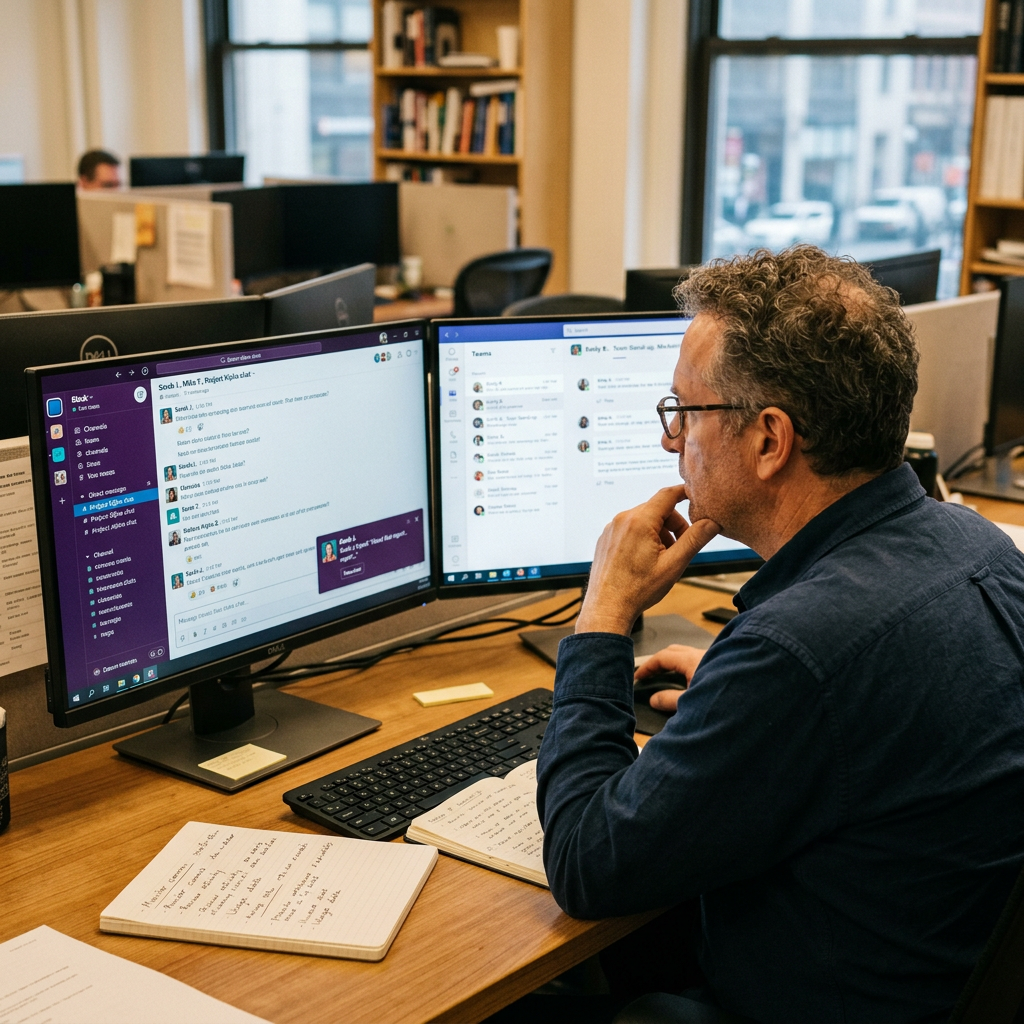

Workplace communication has changed dramatically over the last decade. Instead of relying on email, many companies now use Slack and Microsoft Teams for daily conversations, project collaboration, file sharing, and virtual meetings. Because these platforms often feel more casual than email, employees sometimes assume their messages are private.
In most cases, they are not.
If you use Slack or Microsoft Teams through your employer, there is a good chance your company can access, monitor, or retain your communications. The extent of that access depends on the platform, company policies, and applicable laws, but employees should generally assume that workplace messages can be reviewed when necessary. Messaging apps sit inside a bigger picture of what your employer can see on a managed device, so check out this guide as well.
This guide explains what employers can see, when monitoring is legal, and what employees should know about their workplace privacy rights. For more information about workplace protections and privacy issues, visit the Employee Rights Hub.
Table of Contents
Can Employers Monitor Slack or Microsoft Teams Messages?
Yes. Employers can often monitor messages sent through company-owned Slack workspaces and Microsoft Teams accounts.
Both platforms are designed for business use and include administrative tools that allow organizations to manage communications, maintain records, investigate complaints, comply with legal obligations, and protect company data.
While employers do not necessarily read every message employees send, they may have the ability to access communications stored on company systems.
As a result, employees should generally treat workplace chat messages the same way they would treat company email.
What Can Employers See on Slack?
Slack administrators can typically access a wide range of information within a company workspace.
Depending on the organization’s subscription level and settings, employers may be able to view public channel conversations, files shared through Slack, user activity logs, and information about workspace usage. In some circumstances, organizations may also be able to access content from private channels or direct messages through compliance and data export tools.
Many employees are surprised to learn that deleting a message does not always guarantee it disappears permanently. Organizations may retain copies of messages through backups, retention policies, or compliance systems.
Because Slack data is generally stored within the employer’s workspace, employees should assume that work-related conversations may be accessible to authorized administrators.
What Can Employers See on Microsoft Teams?
Microsoft Teams offers similar administrative and compliance capabilities.
Organizations using Microsoft 365 can store chats, channel conversations, meeting recordings, transcripts, shared files, and other communications within their business environment. Authorized administrators may have access to these records through compliance, auditing, and eDiscovery tools.
Companies often use these features to investigate workplace complaints, respond to legal requests, comply with regulatory requirements, or protect business information.
As with Slack, messages sent through a company-managed Teams account should generally be considered part of the employer’s communication systems rather than private personal conversations.
Are Private Messages Actually Private?
This is one of the most common questions employees ask.
A direct message between coworkers may feel private because only the participants can see the conversation in the app. However, that does not necessarily mean the employer lacks access.
The answer depends on the platform’s configuration, subscription level, retention policies, and administrative controls. In many organizations, authorized personnel can retrieve communications when there is a legitimate business, legal, or compliance reason to do so.
For practical purposes, employees should assume that messages sent through workplace communication platforms may be accessible to the employer.
Can Employers Monitor Messages on Personal Devices?
Using a personal phone or computer does not automatically make workplace messages private.
If you log into a company Slack workspace or Microsoft Teams account, the messages are still stored within the employer’s systems. Even though the device belongs to you, the communication platform may still be controlled by the organization.
However, employers generally have less visibility into unrelated personal activity that takes place outside company applications, especially when the device is not managed by company software.
The key distinction is not who owns the device but who owns the account and the communication platform.
Is It Legal for Employers to Monitor Workplace Messages?
In the United States, employers generally have broad authority to monitor communications that occur on company-owned systems and accounts.
Employees often have a reduced expectation of privacy when using workplace technology provided by their employer. Many organizations also disclose monitoring practices through employee handbooks, acceptable use policies, onboarding materials, or technology agreements.
That said, employers must still comply with applicable federal, state, and local laws. Certain communications and activities may receive legal protections, and laws governing workplace monitoring can vary depending on location and circumstances.
Employees who have questions about their specific rights should review company policies and consult a qualified employment attorney when necessary.
How Employees Can Protect Their Privacy
The safest approach is to treat Slack and Microsoft Teams like any other workplace communication tool.
Avoid discussing highly personal matters through company accounts. Use personal email accounts and personal messaging platforms for private conversations whenever possible. Review your employer’s technology and monitoring policies so you understand what information may be collected, retained, or reviewed.
Most importantly, assume that anything sent through a company communication platform could eventually be seen by management, human resources, legal personnel, or information technology staff.
The Bottom Line
Employers can often monitor Slack and Microsoft Teams messages because these platforms are typically owned, managed, and controlled by the organization. While employers may not actively review every conversation, they often have the ability to access communications, files, activity logs, and other workplace data when necessary.
Employees should view workplace chat platforms as extensions of company email rather than private messaging services. Understanding how these systems work can help you protect your privacy and avoid misunderstandings at work.
For more guidance on workplace privacy, employee monitoring, and legal rights on the job, explore the Employee Rights Hub.
Related Articles
Can Employers Read Your Work Emails?
Emails sent through a company email account are often subject to employer monitoring and retention policies. Learn when employers can read work emails, what privacy protections may apply, and what employees should know before using company email for personal communications.
Can Employers Monitor Your Computer Activity?
Many employers use monitoring software that can track websites visited, applications used, productivity metrics, and other computer activity. Learn what employers can monitor and what rights employees may have.
Can Employers Track Your Location While Working?
GPS tracking is increasingly common for company vehicles, mobile devices, and field employees. Find out when employers can track location data and what legal limitations may apply.
What Employee Monitoring Software Can See
Employee monitoring tools can collect much more information than many workers realize. Learn what modern workplace surveillance software can track and how employers use these systems.
Disclaimer: This article is for informational purposes only and should not be considered legal advice. Employment laws vary by state and country, and the legality of workplace monitoring depends on the specific circumstances. If you need legal advice regarding your situation, consult a qualified employment attorney. Please read our Terms and Conditions.
Article: Can employers monitor Slack or Microsoft Teams messages?
Discover more from Worker Wisdom℠
Subscribe to get the latest posts sent to your email.