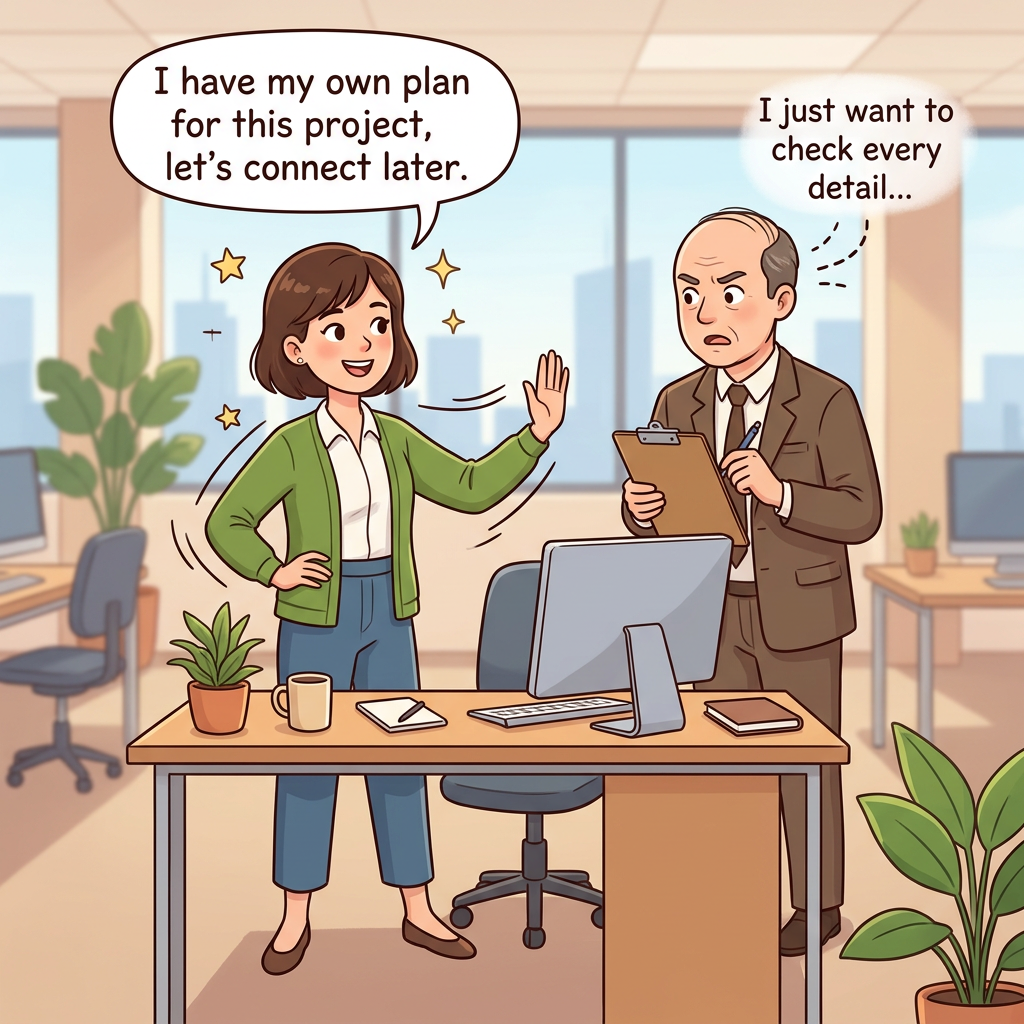

How To Get Your Boss To Stop Micromanaging
Updated August 24, 2026
If your boss constantly checks your work, asks for updates every few minutes, changes your decisions, or seems to need approval for everything you do, you may be dealing with a micromanager.
Micromanagement can make even a good job feel exhausting. It can undermine your confidence, slow down your work, and leave you feeling like you are never trusted to do your job.
The good news is that you may be able to improve the situation without immediately going to HR or looking for another job.
In most cases, the best approach is to give your manager more confidence in your work while setting reasonable boundaries around how you communicate and receive feedback.
But there is an important legal distinction to understand: being micromanaged is generally not, by itself, illegal. Employers usually have broad authority to supervise employees and determine how work gets done. However, micromanagement can become a legal issue if it is tied to discrimination, retaliation, harassment, protected workplace activity, or another violation of employment law.
Here is what you can do if your boss is constantly looking over your shoulder.
Table of Contents
What Is Micromanagement?
Micromanagement occurs when a manager exercises excessive control over an employee’s work instead of giving the employee reasonable autonomy to complete assigned responsibilities.
A micromanaging boss may:
- Constantly ask for progress updates
- Require approval for minor decisions
- Frequently check or redo your work
- Tell you exactly how to complete routine tasks
- Monitor when you arrive, leave, or take breaks
- Send repeated messages asking whether something is finished
- Change your work after you have completed it
- Criticize small details that do not affect the outcome
- Require unnecessary meetings or status reports
- Have difficulty delegating responsibilities
Not every close-working manager is a micromanager. Some jobs legitimately require frequent supervision, especially during training, safety-sensitive work, or projects with significant consequences.
The issue is usually whether the level of supervision is reasonable for your position and whether it prevents you from doing your job effectively.
Is It Legal for Your Boss To Micromanage You?
Generally, yes.
There is no federal employment law that gives employees a general right to be free from micromanagement.
An employer can generally supervise your work, establish procedures, review your performance, require reports, and determine how work should be completed.
Your employer may also increase supervision if:
- You are new to the job
- You are being trained
- You have made significant mistakes
- Your performance has declined
- You are working on a sensitive project
- Your job requires close oversight
- Your employer has legitimate business reasons for doing so
However, management authority has legal limits.
For example, an employer generally cannot use excessive supervision as a way to discriminate against you because of a protected characteristic or retaliate against you for exercising a legally protected right.
Federal employment laws prohibit retaliation against employees who engage in protected activity, including certain complaints about discrimination or harassment. The Department of Labor also enforces anti-retaliation protections for workers who exercise rights under laws it administers.
That means the important question is sometimes not simply “Is my boss micromanaging me?” but “Why am I being treated this way?”
Why Is Your Boss Micromanaging You?
Before confronting your manager, try to figure out what is driving the behavior.
Micromanagement can happen for many reasons.
Your Boss Does Not Trust You Yet
If you are relatively new to the position, your manager may simply need time to see that you can handle the work independently.
In that situation, consistently meeting deadlines and producing reliable work can gradually reduce the need for supervision.
Your Boss Is Under Pressure
Sometimes micromanagement is a symptom of pressure coming from above.
A manager who is being closely monitored by senior leadership may pass that pressure down to employees.
That does not necessarily make the behavior acceptable, but understanding the reason can help you decide how to respond.
You Have Not Established Clear Expectations
Some managers micromanage because they do not know what is happening unless they ask.
If you are not proactively communicating progress, your manager may fill the information gap with constant check-ins.
Creating predictable updates can sometimes dramatically reduce the interruptions.
Your Boss Is Simply a Micromanager
Sometimes there is no deeper explanation.
Some managers have difficulty delegating. Others believe that their way is the only right way to complete a task.
If that is the situation, you may need to establish a more structured working relationship rather than expecting the behavior to disappear on its own.
How To Get Your Boss To Stop Micromanaging
You cannot force your manager to change, but you can make micromanagement less necessary and establish clearer boundaries.
1. Figure Out Exactly What Is Bothering You
Before talking to your boss, identify the specific behaviors that are causing the problem.
Instead of saying:
“You’re always micromanaging me.”
Identify what is actually happening.
For example:
- “I receive several requests for updates throughout the day.”
- “I am required to get approval for decisions that are normally part of my role.”
- “My work is frequently changed after I complete it.”
- “I am being asked to report on tasks multiple times.”
Specific examples are much easier for a manager to understand and address.
2. Give Your Boss More Information Before They Ask
One of the most effective ways to reduce unnecessary check-ins is to communicate proactively.
If your manager repeatedly asks, “How is that project going?” consider sending a short update before they have to ask.
For example:
“Quick update: I’m about halfway through the project and am still on schedule for Friday. I’ll send you the completed draft by 3 p.m. tomorrow.”
You have now answered several questions before they are asked.
Over time, your boss may become more comfortable giving you space.
3. Agree on a Regular Check-In Schedule
If your boss wants constant updates, suggest a predictable system.
You might say:
“Would it be helpful if I sent you a progress update every afternoon instead of sending updates throughout the day?”
This approach does two things.
First, it gives your manager the information they want.
Second, it creates some uninterrupted time for you to actually work.
If your boss agrees, stick to the schedule.
Consistency can help build trust.
4. Ask What Your Boss Actually Needs To Know
Sometimes employees and managers have very different ideas about what constitutes sufficient communication.
Ask directly:
“What information would give you confidence that this project is on track?”
This can turn a vague pattern of checking into specific expectations.
Your manager may only care about deadlines, major problems, and completed milestones.
If you know that, you can focus your updates on those things.
5. Ask for More Autonomy
You do not necessarily have to accuse your boss of micromanaging you.
Instead, frame the conversation around your ability to perform your job.
You could say:
“I’d like to take more ownership of this project. Would you be comfortable with me handling the day-to-day decisions and bringing you the bigger issues?”
That makes the request about responsibility rather than criticism.
6. Establish Decision-Making Boundaries
One of the most frustrating forms of micromanagement is needing approval for every small decision.
Ask your boss which decisions require approval and which ones you can make independently.
For example:
“Can we clarify which decisions you want me to bring to you and which ones you’re comfortable with me handling?”
This can create a practical dividing line.
You may discover that your boss does not actually need to approve as many decisions as you thought.
7. Build Trust by Following Through
Trust is one of the most effective antidotes to micromanagement.
If you say you will finish something Friday, finish it Friday.
If you identify a problem, communicate it early.
If you make a mistake, acknowledge it and explain how you will correct it.
The more predictable and reliable your work becomes, the stronger your argument for greater independence.
8. Keep a Record if the Behavior Becomes Excessive
If the micromanagement is interfering with your work, keep notes about what is happening.
You do not need to create a dramatic dossier.
Simply record:
- Dates
- What your manager asked you to do
- How frequently you were interrupted
- Changes to your assignments
- Conflicting instructions
- Performance criticisms
- Relevant emails or messages
- Any consequences that resulted
Documentation can help you identify patterns.
It can also become important if the situation eventually involves a performance dispute, discrimination complaint, retaliation claim, or termination.
What If Your Boss’s Micromanagement Is Hurting Your Performance?
This is an important point that employees sometimes overlook.
Excessive supervision can actually make it harder to perform well.
For example, imagine that you have a two-hour project that normally requires uninterrupted concentration. Your boss interrupts you every 15 minutes for updates.
You may end up taking four hours to complete the work.
Your manager may then see the longer completion time as evidence that you need even more supervision.
That can create a cycle:
More micromanagement → less productivity → more concern about performance → even more micromanagement.
If this is happening, explain the impact in business terms.
Try:
“I have noticed that frequent interruptions are making it harder for me to complete these projects efficiently. Could we try a scheduled update system so I can have uninterrupted time to work?”
That is generally more effective than simply telling your boss to “back off.”
What If Your Boss Constantly Changes Your Work?
Another common form of micromanagement occurs when a manager repeatedly changes work that has already been completed.
Sometimes that is legitimate. Your manager may have authority to revise the work or may have information you do not have.
But if the changes are constant, contradictory, or unreasonable, ask for clearer expectations.
You might say:
“I want to make sure I’m meeting your expectations. Could we go over what you want the final version to look like before I complete the next one?”
You can also ask for examples of what your manager considers acceptable.
The goal is to turn subjective criticism into objective expectations.
What If Your Boss Micromanages Only You?
This is where you should pay closer attention.
There may be a perfectly legitimate reason why your manager supervises you more closely than other employees. For example, you could be newer, have different responsibilities, or have recently received performance feedback.
But unequal treatment can be more concerning when there is no legitimate explanation.
Ask yourself:
- Are other employees given more independence?
- Are you being held to different standards?
- Did the increased supervision begin after you complained about something?
- Is your manager making comments about a protected characteristic?
- Are you being treated differently because you requested an accommodation?
- Did the behavior change after you reported discrimination or harassment?
- Did it begin after you raised a wage, hour, leave, safety, or other legally protected concern?
The answers can help distinguish ordinary management problems from potentially unlawful conduct.
Can Micromanagement Be Workplace Harassment?
Usually, not by itself.
Being overly controlling, rude, demanding, or annoying does not automatically constitute illegal workplace harassment.
Federal employment discrimination laws generally prohibit harassment based on protected characteristics such as race, color, religion, sex, national origin, age, disability, and genetic information. The EEOC explains that harassment becomes unlawful when the conduct is sufficiently severe or pervasive to create a hostile or abusive work environment, or when it results in an adverse employment action.
Therefore, a boss who constantly checks your work is not necessarily violating federal law.
But the situation can be different if the micromanagement is being used as part of discriminatory or retaliatory treatment.
What If Your Boss Started Micromanaging You After You Complained?
This deserves particular attention.
Suppose you complained that you were being sexually harassed. Soon afterward, your manager begins scrutinizing everything you do, requiring excessive reports, criticizing minor mistakes, and treating you differently from your coworkers.
The timing alone does not automatically establish unlawful retaliation.
But retaliation laws can protect employees who engage in legally protected activity.
The EEOC explains that protected activity can include communicating with a supervisor or manager about employment discrimination or harassment, participating in an investigation, filing a discrimination complaint, or reasonably opposing conduct believed to violate federal EEO laws.
Similarly, the Department of Labor enforces anti-retaliation provisions under several workplace laws, including protections for workers who raise certain wage and hour concerns.
If you believe the increased supervision is punishment for exercising a protected right, document what happened and consider speaking with HR, the appropriate government agency, or an employment attorney.
What Should You Say to a Micromanaging Boss?
You do not need to have a confrontational conversation.
A calm, professional approach is usually better.
Here are several ways to start the conversation:
If you want more independence:
“I’d like to take more ownership of my work. Could we talk about which responsibilities I can handle independently?”
If you are receiving too many interruptions:
“I’m finding that frequent check-ins are making it harder for me to stay focused. Would you be open to setting regular times for progress updates?”
If your boss wants constant updates:
“Would a daily status update give you the information you need without requiring us to check in throughout the day?”
If you are unsure about expectations:
“I’d like to make sure I’m meeting your expectations. Could we clarify what you want me to handle independently and what you want me to bring to you?”
These conversations are generally more productive than saying, “You’re micromanaging me.”
When Should You Go to HR?
You do not necessarily need to involve HR simply because your boss is annoying or overly controlling.
But consider escalating the situation if:
- You have tried addressing the issue directly and nothing changes.
- The behavior is seriously interfering with your ability to work.
- Your manager is treating you differently from similarly situated employees.
- Your manager is making discriminatory comments.
- You believe the behavior is retaliation.
- You are being threatened or harassed.
- Your performance evaluation appears to be based on unfair or inconsistent standards.
- You believe company policies are being violated.
Before contacting HR, review your employee handbook and any applicable workplace policies.
Keep your complaint factual.
Explain what happened, when it happened, who was involved, and how the behavior affected your work.
Avoid exaggerating or assigning motives you cannot establish.
What If HR Does Nothing?
Unfortunately, reporting a workplace problem does not guarantee that the employer will resolve it the way you want.
Your employer may decide that the manager’s behavior is legitimate supervision.
If the issue involves potential discrimination, retaliation, wage violations, protected leave, or another legal right, however, you may have options outside the company.
Depending on the issue, those options may include contacting a federal or state enforcement agency or consulting an employment attorney.
The specific agency and deadlines depend on the type of workplace problem and the law involved.
Can You Quit Because Your Boss Micromanages You?
Yes. You can generally choose to leave a job because you are unhappy with your manager.
But quitting can have legal and financial consequences, so it is worth thinking carefully before resigning.
If you believe your working conditions have become legally intolerable or that you are experiencing unlawful discrimination or retaliation, consider getting legal advice before resigning.
Do not assume that a bad boss automatically means you have a legal claim for constructive discharge or wrongful termination.
Those claims have specific legal requirements that vary depending on the circumstances and applicable law.
How To Protect Yourself While Dealing With a Micromanaging Boss
If you are dealing with persistent micromanagement, focus on what you can control.
Communicate proactively. Give your manager predictable updates.
Clarify expectations. Ask what decisions you can make independently.
Meet deadlines. Consistent performance helps establish credibility.
Keep records. Document significant changes, criticisms, and unusual treatment.
Stay professional. Avoid emotional confrontations or hostile messages.
Review workplace policies. Your employee handbook may explain reporting procedures and performance expectations.
Watch for legal issues. Pay attention to discrimination, harassment, retaliation, wage violations, or other protected workplace concerns.
Escalate strategically. If a reasonable conversation does not work, consider HR or another appropriate reporting channel.
The Bottom Line
You generally cannot force your boss to stop micromanaging you, and micromanagement by itself is usually not illegal.
But you can often reduce it by creating clearer expectations, providing proactive updates, demonstrating reliability, and asking for greater autonomy.
The situation deserves more attention if your boss is treating you differently because of a protected characteristic or because you exercised a legal workplace right. Federal law protects employees from certain forms of discrimination, harassment, and retaliation, although whether a particular situation violates the law depends on the facts.
If the behavior is simply frustrating management, focus first on improving the working relationship.
If it appears to be part of a larger pattern of unlawful treatment, document what is happening and consider getting professional advice.
For more information about workplace rules, management practices, and your rights as an employee, visit Worker Wisdom’s Workplace Rules & Policies resources and our broader Employee Rights guides.
Related Articles
- How To Deal With Rude Colleagues
- Can an Employer Change Its Policies Without Notice?
- Can Your Employer Require a Dress Code?
- Can Your Employer Search Your Personal Belongings at Work?
- Can Your Employer Install Monitoring Software on Your Personal Computer?
Disclaimer
This article is for informational and educational purposes only and does not constitute legal advice. Employment laws vary by state, and workplace rules can differ depending on the circumstances. Reading this article does not create an attorney-client relationship. If you believe your employer is discriminating against you, retaliating against you, harassing you, or otherwise violating your workplace rights, consider consulting a qualified employment attorney licensed in your state. Please read our Terms and Conditions.
Article: How To Get Your Boss To Stop Micromanaging
Discover more from Worker Wisdom℠
Subscribe to get the latest posts sent to your email.
Pingback: Mental Health At Work: How You Can Support Coworkers - Worker Wisdom™
Pingback: How To Manage Work-Life Balance When You Have A Difficult Boss - Worker Wisdom™