
Updated: July 17, 2026
Getting paid is one of the most basic parts of having a job—but your paycheck is more than just the money deposited into your bank account. A paycheck stub (also called a pay stub, wage statement, or earnings statement) shows important details about how your pay was calculated, including your wages, deductions, taxes, and other withholdings.
Many employees assume their employer is automatically required to provide a paycheck stub every pay period. However, the answer depends on where you live. Federal law requires employers to pay employees accurately, but it does not require every employer to provide a physical or electronic paycheck stub.
State laws determine whether employers must provide pay stubs and what information must be included.
Understanding your rights can help you make sure you are being paid correctly and identify potential payroll errors before they become bigger problems.
For more information about your workplace protections, see our Employee Rights Guide and Pay and Benefits Guide, which explain employee rights involving wages, compensation, and workplace laws.
Table of Contents
What Is a Paycheck Stub?
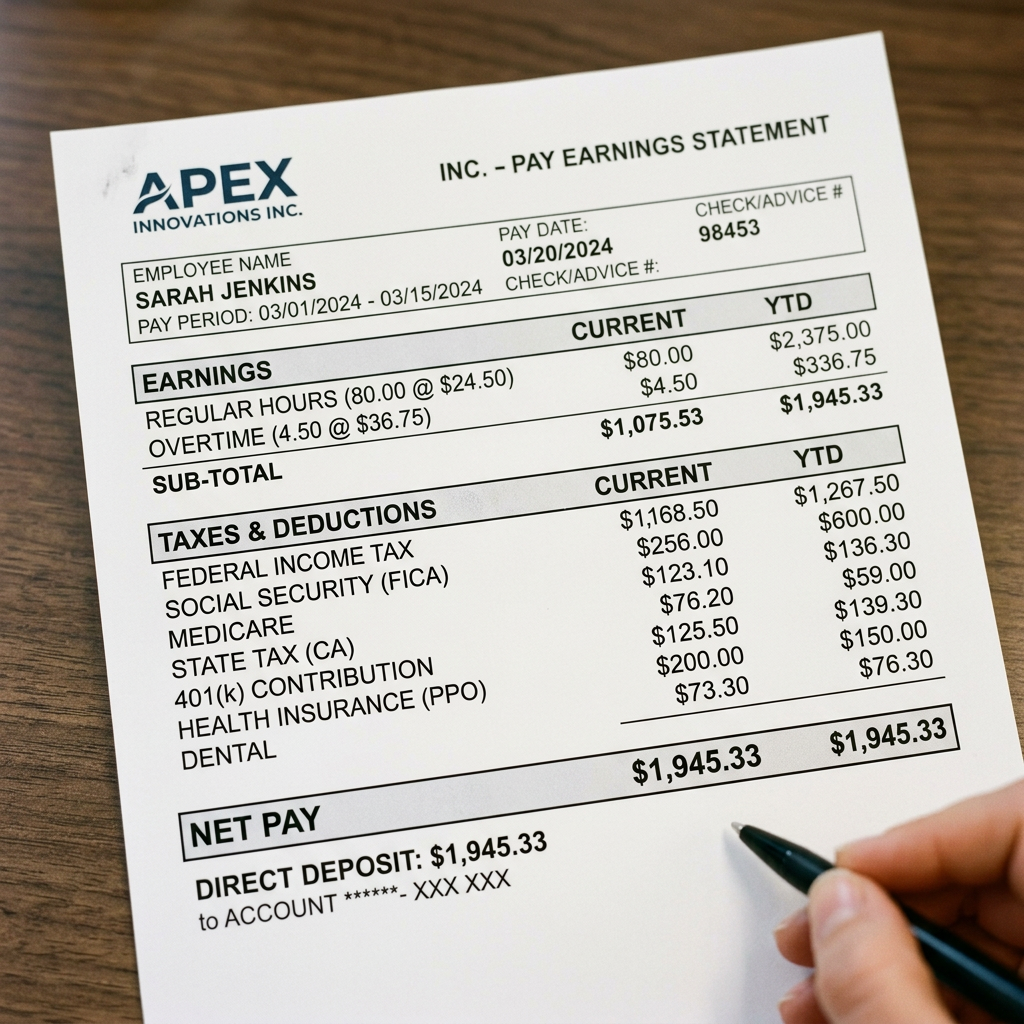
A paycheck stub is a document that breaks down your earnings for a specific pay period. It typically includes information such as:
- Your gross wages before deductions
- Your hourly rate or salary information
- The number of hours worked (for hourly employees)
- Overtime hours and overtime pay
- Bonuses, commissions, or other compensation
- Taxes withheld
- Health insurance deductions
- Retirement contributions
- Other payroll deductions
- Your net pay (the amount you actually receive)
A pay stub helps employees verify that they are being paid properly and that deductions taken from their paycheck are accurate.
For example, if you worked overtime but your paycheck does not reflect overtime pay, your pay stub can help you identify the issue and provide documentation when discussing the problem with your employer or filing a wage complaint.
Does Federal Law Require Employers to Provide Pay Stubs?
No. The federal Fair Labor Standards Act (FLSA) requires employers to keep accurate records of employee wages, hours worked, and other payroll information, but it does not require employers to provide employees with a paycheck stub.
Instead, paycheck stub requirements are generally controlled by state and local laws.
This means an employee in one state may have a legal right to receive a detailed pay stub, while an employee in another state may not have the same requirement.
Even when federal law does not require pay stubs, employers must still comply with wage and hour laws, including paying employees all wages they are legally owed.
Why Are Paycheck Stubs Important?
Paycheck stubs provide employees with a record of their earnings and can be useful for many reasons, including:
Checking for Payroll Mistakes
Payroll errors happen. A pay stub allows you to confirm:
- You were paid for all hours worked
- Your overtime was calculated correctly
- Your deductions are accurate
- Your pay rate is correct
Applying for Loans or Housing
Many lenders, landlords, and financial institutions request proof of income. Pay stubs are often used to verify employment and earnings.
Filing Taxes
Pay information from your paycheck stubs can help you compare your earnings throughout the year and make sure your tax documents are accurate.
Protecting Your Workplace Rights
Keeping copies of your pay stubs can be important if there is ever a dispute about unpaid wages, incorrect deductions, or missing overtime pay.
Employees should consider saving copies of their paycheck records, even if their employer provides electronic access through a payroll system.
Do Employers Have to Give Paper Pay Stubs?
Not always. Many employers have moved away from paper paychecks and paper pay stubs, instead providing employees with electronic access through payroll systems.
Whether an employer can provide electronic pay stubs instead of paper copies depends on state law.
Some states allow electronic pay statements as long as employees can easily access and print their information. Other states have additional requirements, such as making sure employees who cannot access electronic records are provided another option.
Employees should check their state’s wage laws to understand what their employer is required to provide.
Is My Employer Required to Give Me a Paycheck Stub?
Paycheck Stub Requirements by State
Because federal law does not require employers to provide paycheck stubs, the rules vary depending on the state where you work.
Some states require employers to provide a detailed pay statement every pay period. These states may require employers to include specific information, such as:
- Hours worked
- Pay rate
- Gross wages
- Net wages
- Deductions
- Overtime hours and pay
- Employer information
- Dates covered by the pay period
Other states do not require employers to provide a paycheck stub at all, as long as the employer maintains accurate payroll records required by law.
Some states also have what are known as access states, meaning employers must provide employees with access to their payroll information but may provide it electronically instead of giving employees a paper copy.
Because these requirements change and vary widely, employees should check the wage statement laws in their state to understand their specific rights.
What Information Must Be Included on a Pay Stub?
When a state requires employers to provide paycheck stubs, the required information can differ. However, many wage statements include similar details, such as:
Employee Information
A pay stub may include:
- Employee name
- Employee identification number
- Employer name and address
Pay Period Information
Employees should generally be able to see:
- The dates covered by the paycheck
- The payment date
- The number of hours worked during the pay period
Earnings Information
A paycheck stub may show:
- Regular wages
- Overtime wages
- Salary earnings
- Commission payments
- Bonuses
- Other compensation
For hourly employees, the pay stub is especially important because it allows you to confirm that your employer correctly recorded your hours and overtime.
Deductions and Withholdings
Pay stubs often show amounts taken from your paycheck, including:
- Federal income taxes
- State and local taxes
- Social Security and Medicare taxes
- Health insurance premiums
- Retirement contributions
- Wage garnishments
- Other authorized deductions
Reviewing deductions can help you catch mistakes, such as being charged for benefits you did not elect or having incorrect amounts withheld.
Can My Employer Refuse to Give Me a Pay Stub?
Whether your employer can refuse to provide a pay stub depends on your state’s laws.
If your state requires employers to provide wage statements, your employer generally cannot refuse to give you the information required by law.
If your employer does not provide a required pay stub, you may have several options, including:
- Asking your employer or payroll department for your wage statements
- Reviewing your company’s payroll system for electronic copies
- Contacting your state labor agency
- Filing a wage complaint if your employer is violating state law
Even if your employer is not legally required to provide a traditional paycheck stub, you may still have the right to request information about your wages and payroll records.
What If My Paycheck Stub Has Incorrect Information?
A paycheck stub is only useful if the information is accurate.
If you notice a mistake, review the issue carefully and gather supporting information, such as:
- Your work schedule
- Time records
- Previous paycheck stubs
- Employment agreements
- Emails or messages discussing your pay rate
Common paycheck errors include:
- Incorrect hourly rate
- Missing overtime pay
- Incorrect number of hours worked
- Wrong deductions
- Missing bonuses or commissions
If you believe you were not paid correctly, you may have rights under federal and state wage laws.
Employers are required to pay employees all wages they are legally owed, including overtime when applicable.
Should I Keep Copies of My Paycheck Stubs?
Yes. Keeping copies of your paycheck stubs is a good workplace recordkeeping practice.
Your pay records can help you:
- Verify your annual income
- Prepare your taxes
- Apply for a loan or mortgage
- Confirm employment history
- Prove your wages in a dispute
Many payroll systems allow employees to download or print old pay statements. If possible, save copies outside of your employer’s system in case you lose access after leaving your job.
Keeping personal copies of important employment documents is one of the best ways employees can protect themselves.
What Should I Do If My Employer Does Not Provide Pay Stubs?
If your employer does not provide paycheck stubs, start by determining whether your state requires them.
You can:
- Check your state’s wage statement requirements.
- Ask your employer’s payroll or human resources department for your records.
- Request access to electronic payroll statements if available.
- Contact your state labor department if you believe your employer is violating the law.
If there are concerns about unpaid wages, missing overtime, or improper deductions, keeping detailed records can make it easier to understand your options.
State-by-State Paycheck Stub Requirements
Because paycheck stub laws are created primarily at the state level, employees have different rights depending on where they work.
Some states require employers to provide a detailed wage statement every pay period. Others only require employers to provide access to payroll information upon request. A few states do not require employers to provide paycheck stubs as long as employers maintain accurate wage records.
Examples of states with paycheck stub requirements include:
- California: Employers generally must provide employees with an accurate, itemized wage statement each pay period that includes specific information about wages, hours, deductions, and employer details.
- New York: Employers must provide wage statements to employees that include required payroll information, with additional requirements for certain industries.
- Illinois: Employers are generally required to provide employees with access to their wage and deduction information and provide copies when requested under state law.
- Pennsylvania: Employers are not generally required to provide employees with a paycheck stub, but employers must maintain accurate payroll records and provide wage information as required by law.
- Texas: Employers are not generally required to provide a separate paycheck stub, but employers must keep accurate wage records under federal and state requirements.
These examples show why employees should check the laws where they work rather than assuming all employers follow the same rules.
State wage statement laws can also change, so employees should verify the current requirements with their state labor agency.
Can I Request a Copy of an Old Paycheck Stub?
In many situations, employees can request copies of previous paycheck stubs or payroll records.
If you need an old pay stub, start by contacting:
- Your employer’s payroll department
- Human resources department
- Your manager or supervisor
Many employers use online payroll systems where employees can access previous pay statements.
If you no longer work for the company, your ability to obtain records may depend on state law and the employer’s recordkeeping obligations. Employers are generally required to maintain payroll records for a certain period of time, even after an employee leaves.
Keeping your own copies of pay records is still the best practice because access to employer systems may end after termination.
Can My Employer Punish Me for Asking for a Pay Stub?
Generally, employers cannot retaliate against employees for exercising legal workplace rights.
Depending on the circumstances, asking for information about your wages, payroll records, or pay statements may be a protected activity.
Employers generally cannot:
- Fire you for requesting legally required wage information
- Reduce your hours as punishment
- Threaten you for raising wage concerns
- Intentionally withhold wages because you complained
Federal and state wage laws protect employees from certain forms of retaliation when they raise concerns about wage violations or unpaid compensation.
If you believe your employer retaliated against you after asking about your paycheck or wages, document what happened and consider seeking guidance from your state labor agency or an employment attorney.
Can I Sue My Employer for Not Providing a Pay Stub?
Whether you can sue an employer for failing to provide a paycheck stub depends on your state’s laws and the specific circumstances.
In states that require wage statements, employers who fail to provide required information may face penalties or other consequences.
A legal claim may be possible if the missing pay information is connected to other wage violations, such as:
- Unpaid wages
- Unpaid overtime
- Illegal deductions
- Failure to pay the agreed-upon wage
- Payroll record violations
However, simply not receiving a paycheck stub does not automatically mean you have a lawsuit. The available remedies depend on the law where you work and what happened.
Frequently Asked Questions About Paycheck Stubs
Do salaried employees get paycheck stubs?
It depends on state law and employer practices. Salaried employees may receive paycheck stubs just like hourly employees, but the information required may differ.
A salary employee’s pay stub may show the salary amount, deductions, taxes, and other compensation information.
Does direct deposit replace a paycheck stub?
No. Direct deposit only changes how you receive your wages. It does not necessarily replace your right to receive required wage information.
An employer may still need to provide a paper or electronic pay statement depending on state law.
Can my employer charge me for a copy of my pay stub?
Some states regulate whether employers can charge employees for copies of wage statements. If you need a copy of your payroll records, check your state’s requirements.
What if my employer says paycheck stubs are not required?
Your employer may be correct if your state does not require them. However, employers must still follow wage and recordkeeping laws.
If you are concerned about your pay, ask for documentation showing how your wages were calculated.
Are electronic pay stubs legal?
In many states, yes. Employers may provide electronic wage statements instead of paper copies if they follow applicable state requirements and employees can reasonably access their records.
Final Thoughts: Know Your Rights About Paycheck Stubs
A paycheck stub is an important tool for understanding your wages and protecting yourself from payroll mistakes. While federal law does not require every employer to provide a pay stub, many states require employers to provide detailed wage information.
Knowing your state’s rules, keeping your own payroll records, and reviewing each paycheck carefully can help you catch errors and protect your workplace rights.
For more information about wages, benefits, and workplace protections, visit our Employee Rights Guide and Pay and Benefits Guide, which cover important topics employees should understand about compensation and employment laws.
Related Articles
- How to Read Your Paycheck Stub: Understanding Your Earnings and Deductions
- What Should I Do If My Employer Does Not Pay Me?
- Can My Employer Change My Pay Without Notice?
- Are Employers Required to Pay Overtime?
- What Are My Rights If My Employer Makes an Incorrect Payroll Deduction?
- Employee Rights Guide: Understanding Your Workplace Protections
Disclaimer
This article is for informational purposes only and does not constitute legal advice. Employment and wage laws vary by state and may change over time. The information provided is intended to help employees better understand their general rights regarding paycheck stubs and wage statements, but it should not be used as a substitute for advice from a qualified employment attorney or your state labor agency. If you have specific questions about your situation, consider seeking professional guidance. Please read our Terms and Conditions.
Discover more from Worker Wisdom℠
Subscribe to get the latest posts sent to your email.