
Updated: 8/20/2026
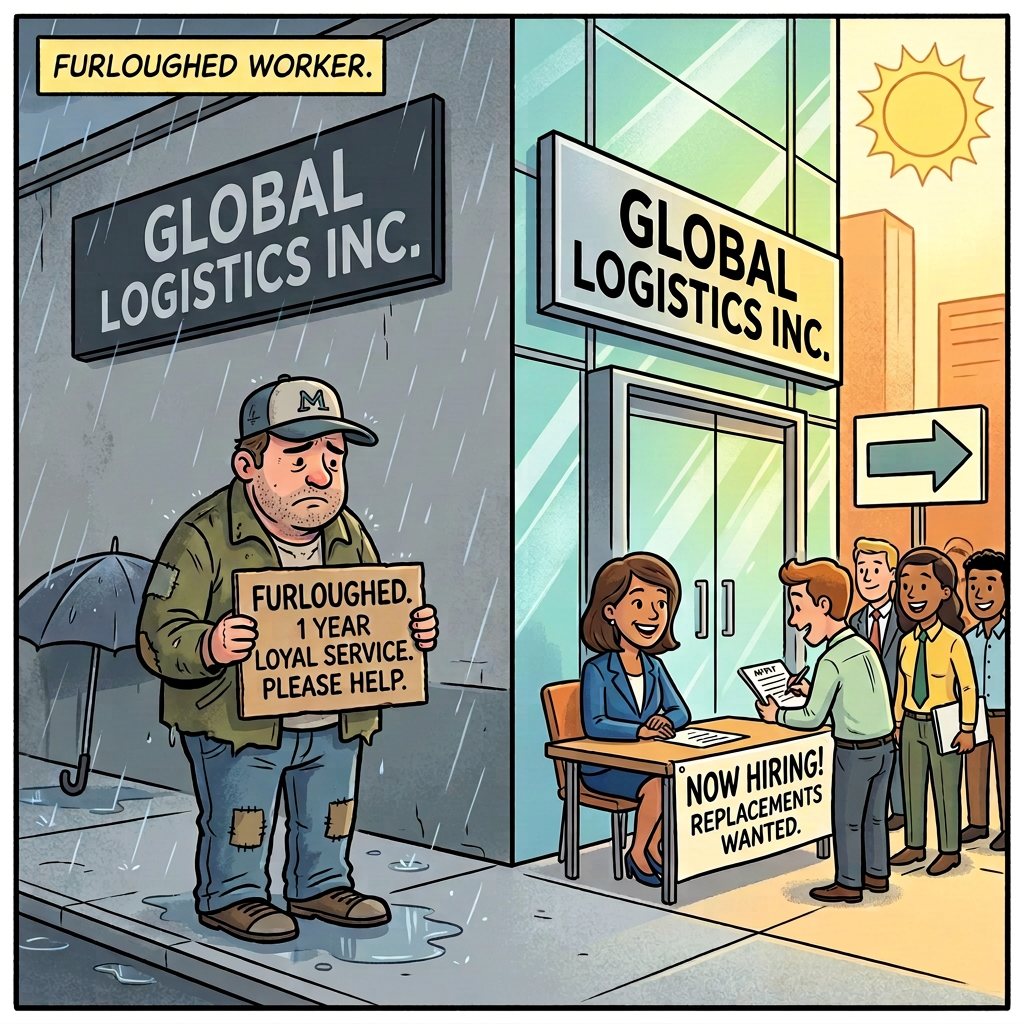
Being placed on furlough can leave you wondering whether your job will still be there when the furlough ends. One of the most concerning questions is: Can my company hire someone for my job while I am on furlough?
In many cases, yes. A furlough does not automatically guarantee that your employer must keep your exact position open indefinitely. Whether your employer can permanently replace you depends on several factors, including the terms of the furlough, your employment agreement, company policies, whether you are covered by a collective bargaining agreement, and whether another law protects your job.
However, if your furlough is connected to FMLA leave or another legally protected absence, the answer can be different. Federal law may give you specific rights to return to your job or an equivalent position. Here’s what you need to know.
If you are dealing with a furlough, you may also want to review the other employment and hiring resources in our Hiring & Careers Hub.
Table of Contents
Quick Answer
Yes, an employer may be able to hire someone while you are on furlough, but that does not automatically mean it can permanently take away your job.
A furlough generally means that an employee remains employed but is temporarily not working or is working reduced hours. Federal wage-and-hour law recognizes that employers may reduce the hours of nonexempt employees when there is less work available, although employers must still comply with minimum-wage and overtime requirements for hours actually worked.
The important question is whether your furlough provides job protection.
If the company told you that you are temporarily furloughed and will return to your position, but then hires someone to permanently fill that same position, you should examine the documents and circumstances surrounding the furlough.
What Is a Furlough?
A furlough is generally a temporary reduction in work or a temporary period when an employee does not work.
Unlike a termination, a furlough may allow the employment relationship to continue.
For example, a company experiencing a temporary slowdown might tell employees:
“You are being furloughed for six weeks and are expected to return when business conditions improve.”
During the furlough, the employee may not receive wages because the employee is not working. Depending on the employer and the circumstances, benefits may or may not continue.
Furloughs can occur in both private and public employment, and the rules can differ depending on the situation.
The most important thing to determine is what your employer actually promised about your return to work.
Can an Employer Hire Someone While You Are on Furlough?
Generally, there is no blanket federal law that prohibits an employer from hiring another person while an employee is furloughed.
But hiring someone to perform your job can raise questions about whether the furlough is actually temporary.
For example, imagine that your employer tells you:
- Your position is temporarily furloughed.
- Your employment is continuing.
- You will return when the furlough ends.
- The company then advertises your exact position.
- A new employee is hired to permanently perform your duties.
- You are later told there is no position available for you.
That situation deserves a closer look.
The fact that an employer hired someone does not automatically prove that the employer violated the law. But the employer’s statements, policies, agreements, and reason for replacing you can matter.
Does a Furlough Guarantee That You Will Get Your Job Back?
Not necessarily.
The word “furlough” does not by itself create a universal federal guarantee that you will return to your exact position.
Your rights may depend on:
- What your employer told you when the furlough began
- Written furlough policies
- Your employee handbook
- An employment contract
- A collective bargaining agreement
- State employment laws
- Whether another federal law protects your absence
- Whether the employer’s actions involve discrimination or retaliation
For example, if your employer’s written furlough agreement says that you will return to your position after a specified period, that document could be important if the employer later attempts to permanently replace you.
This is one reason you should keep copies of any furlough notices, emails, letters, employee handbook provisions, and other communications about your status.
What If Your Employer Said the Furlough Was Temporary?
This is an important distinction.
If your employer specifically told you that the furlough was temporary and that you would return to your job, a later decision to permanently replace you may conflict with what you were told.
That does not automatically mean you have a legal claim.
But you should look closely at:
What Did the Employer Promise?
Look for statements such as:
- “You will return to your position.”
- “Your job will be waiting for you.”
- “This is a temporary furlough.”
- “You will return when business conditions improve.”
- “Your employment is continuing during the furlough.”
The exact language can matter.
Was the Promise in Writing?
Written documentation is particularly useful.
Save:
- Furlough notices
- Emails from HR
- Text messages from management
- Employee handbook provisions
- Employment agreements
- Union agreements
- Pay statements
- Notices about the expected return date
Do not assume an email is unimportant simply because it came from a supervisor rather than HR.
What If the Company Says Your Position Was Eliminated?
An employer may have legitimate business reasons for eliminating positions.
For example, a company may experience:
- A significant loss of revenue
- A restructuring
- A department closure
- A reduction in business
- A merger
- A change in technology
- A permanent reduction in staffing
An employer may be able to eliminate a position for legitimate business reasons even when an employee is on furlough.
However, the company cannot use a purported business decision as a cover for unlawful discrimination or retaliation.
The circumstances matter.
For example, if an employer says your position was eliminated but immediately hires someone to perform substantially the same job, you may reasonably want to ask questions about what actually happened.
What If the Company Hires Someone to Do the Same Work?
Hiring someone to perform substantially the same work does not automatically make the employer’s actions illegal.
But it can be an important fact.
Consider two different situations.
Example 1: Legitimate Restructuring
A company furloughs 50 employees because of a major business downturn.
Several months later, the company permanently eliminates a department and reorganizes the work. It hires employees for newly structured positions with substantially different responsibilities.
The employer may have a legitimate business explanation for the changes.
Example 2: Your “Temporary” Furlough Becomes a Replacement
Your employer tells you that you are being furloughed temporarily and that you will return to your job.
While you are furloughed, the company advertises your exact position, hires someone to perform the same duties, and later tells you that there is no job available.
That situation raises more questions.
The employer’s explanation, documentation, employment agreements, and applicable laws would all matter.
What If You Are an At-Will Employee?
At-will employment gives employers substantial flexibility, but it does not eliminate all employee protections.
In most states, an at-will employer can generally terminate an employee for a lawful reason without providing a specific reason or advance notice. However, federal and state laws prohibit termination for certain unlawful reasons, such as discrimination or retaliation.
Being furloughed does not automatically change an employee’s at-will status.
However, an employer may have made specific promises about the furlough that could affect the situation.
Your employment status, any applicable agreement, and the reason for the employer’s decision should all be considered.
What If You Are Covered by a Union Contract?
If you are a union employee, do not assume the normal at-will rules apply.
A collective bargaining agreement may contain specific provisions regarding:
- Furloughs
- Layoffs
- Recalls
- Seniority
- Job elimination
- Replacements
- Reinstatement
- Bidding for available positions
Your union contract may provide greater protections than federal law.
If you are represented by a union, review the applicable agreement and speak with your union representative about the employer’s decision.
What If Your Furlough Is Actually FMLA Leave?
This is one of the most important exceptions.
FMLA is different from an ordinary furlough.
Eligible employees covered by the Family and Medical Leave Act generally have job-protected leave for qualifying family and medical reasons. When FMLA leave ends, the employee generally must be restored to the same job or an equivalent position.
The Department of Labor specifically explains that an employee’s right to reinstatement can apply even if the employer has hired a replacement or restructured the position to accommodate the employee’s absence.
For example, if you take qualifying FMLA leave and your employer hires someone temporarily to cover your work, the company generally cannot simply tell you that you have no job when you return because it likes the replacement better.
The FMLA rules are different from ordinary furlough rules.
If your situation involves medical or family leave, it is important to determine whether your absence was actually designated as FMLA leave.
Can an Employer Replace You Because You Took FMLA?
Generally, no.
The FMLA prohibits employers from interfering with an employee’s FMLA rights and from retaliating against an employee for exercising those rights.
An employer may still take legitimate employment actions unrelated to the employee’s use of FMLA. For example, a genuine company-wide reduction in force may affect an employee who is on FMLA leave if the employee would have been affected regardless of the leave.
But the employer cannot simply use the employee’s protected leave as the reason for removing the employee from the job.
If you are unsure whether your leave was protected by FMLA, review the notices you received from your employer. Covered employers have specific notice obligations regarding FMLA eligibility, rights and responsibilities, and whether leave is designated as FMLA leave.
What If Your Employer Is Replacing You Because of Discrimination?
An employer cannot legally use a furlough as a way to discriminate against an employee based on a protected characteristic.
Depending on the applicable law, protected characteristics can include things such as:
- Race
- Color
- Religion
- Sex
- Pregnancy
- National origin
- Age
- Disability
- Genetic information
State and federal laws may provide different protections, and additional protections can apply depending on the circumstances.
For example, if your employer furloughs you and then hires someone else because of your age, sex, disability, or another protected characteristic, the issue is no longer simply whether the company can replace a furloughed employee.
It may become a discrimination issue.
What If the Replacement Is Hired as a Retaliation?
Retaliation can also change the legal analysis.
For example, suppose you:
- Reported discrimination to HR
- Reported wage violations
- Exercised FMLA rights
- Reported certain safety violations
- Participated in a protected investigation
- Engaged in another activity protected by law
If your employer then furloughs you, hires someone to replace you, or refuses to bring you back because you engaged in protected activity, there may be a retaliation issue.
The timing of events can be relevant, although timing alone does not prove unlawful retaliation.
What Should You Do If Your Company Hires Someone for Your Job?
If you discover that your employer has hired someone to perform your job while you are furloughed, do not immediately assume that you have lost your job.
Instead, gather information.
1. Review Your Furlough Notice
Look for language explaining:
- Whether the furlough is temporary
- Whether your employment continues
- Your expected return date
- Whether your position is guaranteed
- Whether the company can extend the furlough
- What happens if the business does not recover
2. Review Your Employee Handbook
Look for policies concerning:
- Furloughs
- Layoffs
- Job elimination
- Recall rights
- Seniority
- Termination
- Leave
3. Ask HR for Clarification
You can ask a straightforward question:
“I understand that I am currently on furlough. I have learned that someone has been hired to perform my position. Can you clarify whether my position still exists and whether I am still expected to return when the furlough ends?”
Consider asking for the response in writing.
4. Save Your Documentation
Keep copies of:
- Furlough notices
- Emails
- Text messages
- Job postings
- Communications from HR
- Your employment agreement
- Your employee handbook
- Union documents
- Any information about your expected return date
5. Determine Whether Another Law Protects You
Ask whether your situation involves:
- FMLA
- Disability accommodations
- Anti-discrimination laws
- Retaliation protections
- State leave laws
- A collective bargaining agreement
- An employment contract
The fact that you are furloughed does not answer all of these questions.
Does Hiring Someone Mean You Have Been Fired?
Not necessarily.
A company can hire another employee without formally terminating your employment.
However, if the employer tells you that you will not be returning because another employee now has your position, the situation may effectively involve a termination or permanent job elimination.
Ask your employer to clarify your employment status.
If the company says you are still employed but refuses to explain when or whether you will return, keep records of those communications.
What If the Employer Stops Calling It a Furlough?
Sometimes an employer may initially describe an absence as a temporary furlough and later decide that the position will be permanently eliminated.
That can happen during a business restructuring or financial downturn.
The employer’s ability to do this depends on the circumstances and any legal or contractual obligations that apply.
If you were promised a specific return date or job restoration, however, do not ignore that documentation.
The difference between:
“You are temporarily furloughed and will return to your job”
and
“Your position is being eliminated and we do not know whether there will be work for you later”
can be significant.
Frequently Asked Questions
Can my employer hire someone while I am on furlough?
Yes, an employer may be able to hire another employee while you are furloughed. However, whether the employer can permanently replace you depends on the circumstances, including any contractual promises, company policies, union agreements, and other laws protecting your employment.
Can my employer replace me during a furlough?
Possibly. A furlough does not automatically create a federal right to return to your exact position. However, other legal protections may apply, including FMLA job-restoration rights.
Is a furlough the same as being fired?
No. A furlough generally means that the employment relationship continues while the employee temporarily stops working or works reduced hours. A termination ends the employment relationship.
However, an employer can later decide to permanently eliminate a position or terminate employment, subject to applicable law.
Can my employer hire a replacement if I am on FMLA?
FMLA has stronger job-restoration protections. An employer may use a temporary replacement while an employee is on FMLA leave, but the employee generally retains the right to return to the same or an equivalent position when the protected leave ends.
What if my employer promised that I would get my job back?
The promise may be important, particularly if it appears in a written furlough agreement, employment contract, handbook, email, or other document. Whether the promise is legally enforceable depends on the specific circumstances and applicable state law.
Can I collect unemployment during a furlough?
Possibly. Eligibility for unemployment benefits depends on federal and state rules, the reason for the furlough, and whether you meet your state’s eligibility requirements. A furlough can be treated differently from a permanent termination for unemployment purposes.
Check your state’s unemployment agency for the rules that apply to your situation.
Related Articles
- What Is At-Will Employment? — Learn how at-will employment works and the limits on an employer’s ability to end employment.
- At-Will Employment: When “At-Will” Really Isn’t — Understand the contracts, laws, and other exceptions that can limit at-will employment.
- Changes Your Employer Can Make Without Notice — Learn about changes an employer may be able to make to your job or working conditions.
- Does FMLA Protect Your Job? When Your Employer Can and Can’t Fire You — Find out when FMLA provides job protection and when an employer may still legally take employment action.
- What Happens If You Don’t Return to Work After FMLA? — Understand what can happen when protected FMLA leave ends and an employee does not return.
The Bottom Line: Can My Company Hire Someone for My Job While I Am on Furlough?
A company may be able to hire someone while you are on furlough, but that does not automatically mean it can permanently take your job away.
A furlough generally does not provide the same automatic job-restoration rights as FMLA. Your rights may instead depend on your employer’s furlough terms, employment agreement, company policies, union contract, state law, and whether another federal or state protection applies.
If your employer told you that the furlough was temporary and that you would return to your job, keep that documentation. If the company hires someone to perform your work and then tells you that you will not be returning, ask for an explanation in writing and review whether another law or agreement protects you.
Most importantly, do not assume that hiring a replacement automatically means your employer has acted illegally—or that you have no rights. The details of the furlough and the reason for the employer’s decision matter.
For more information about jobs, employment agreements, hiring practices, and career-related workplace questions, visit the Hiring & Careers Hub.
Disclaimer
This article is for informational purposes only and does not constitute legal advice. Employment laws vary by state and depend on the specific facts of each situation. Reading this article does not create an attorney-client relationship. If you have questions about your specific situation, consider speaking with a qualified employment attorney or the appropriate government agency. Please read our Terms and Conditions.
Article: Can My Company Hire Someone for My Job While I Am on Furlough?
Discover more from Worker Wisdom℠
Subscribe to get the latest posts sent to your email.